Restaurant General Manager
Owns staffing decisions, attendance issues, break timing, and the operational health of the shift.
SHIFTLINE · B2B SAAS PRODUCT DESIGN
A workforce operations platform that helps restaurant managers understand staffing, monitor live shifts, and manage breaks before coverage issues affect service.
THE CHALLENGE
While working in a restaurant, I worked closely with the day-to-day systems managers rely on to keep service running: schedules, attendance, employee availability, breaks, shift changes, and coverage across front- and back-of-house roles.
I saw how much of a manager’s attention goes into connecting information that lives in different places. A call-out, late arrival, or break change can quickly become a coverage problem, yet the manager often has to piece together the impact across schedules, messages, time-clock records, and spreadsheets while service is already moving.
That experience became the starting point for Shiftline: a concept for bringing the operational state of a shift into one clearer system.
How might we give restaurant managers one operational view of the shift, so they can recognize staffing conflicts before they affect service?
This is an independent concept study informed by my restaurant operations experience. It has not been launched or evaluated with formal user testing.
TARGET AUDIENCE
Shiftline is designed around restaurant managers who coordinate people, timing, and coverage throughout the day—not only when the weekly schedule is created.
Owns staffing decisions, attendance issues, break timing, and the operational health of the shift.
Teams with multiple front- and back-of-house roles where one staffing change can affect several stations at once.
Needs to understand who is working, where coverage is thin, what is changing next, and where intervention is required.
COMPETITOR ANALYSIS
I reviewed established workforce products to understand where Shiftline should fit. The opportunity was not to remove scheduling, time tracking, or break management, but to connect those signals around the manager’s immediate operational decisions.
PRODUCT STRATEGY
Shiftline treats staffing as a connected system. The product moves from understanding the current shift, to identifying operational risk, to supporting the manager’s next decision.
ROLE & PERMISSION SYSTEM
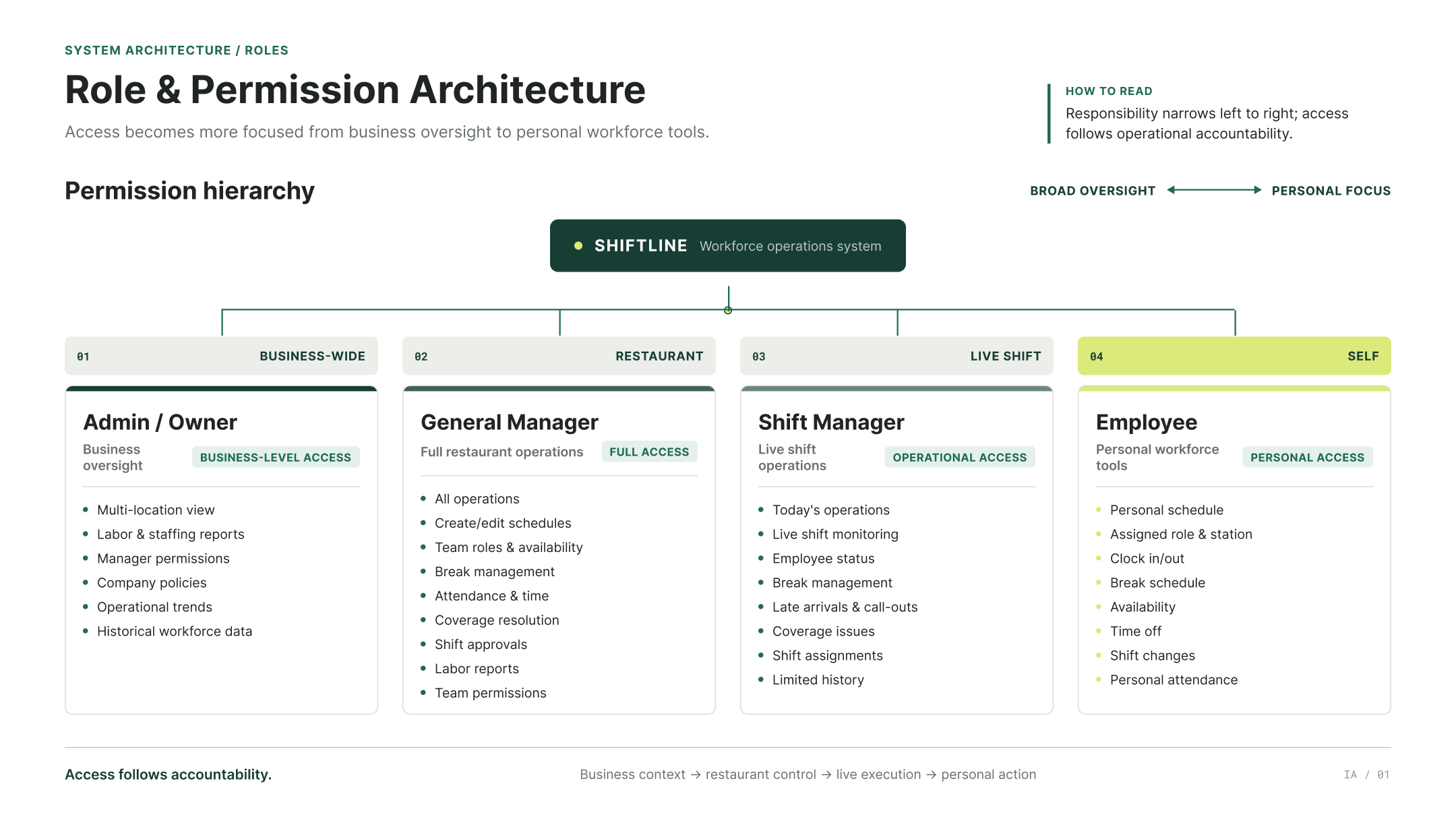
The hierarchy establishes who is responsible for business oversight, restaurant operations, live-shift decisions, and personal workforce tasks. This creates the foundation for consistent permissions across the product.
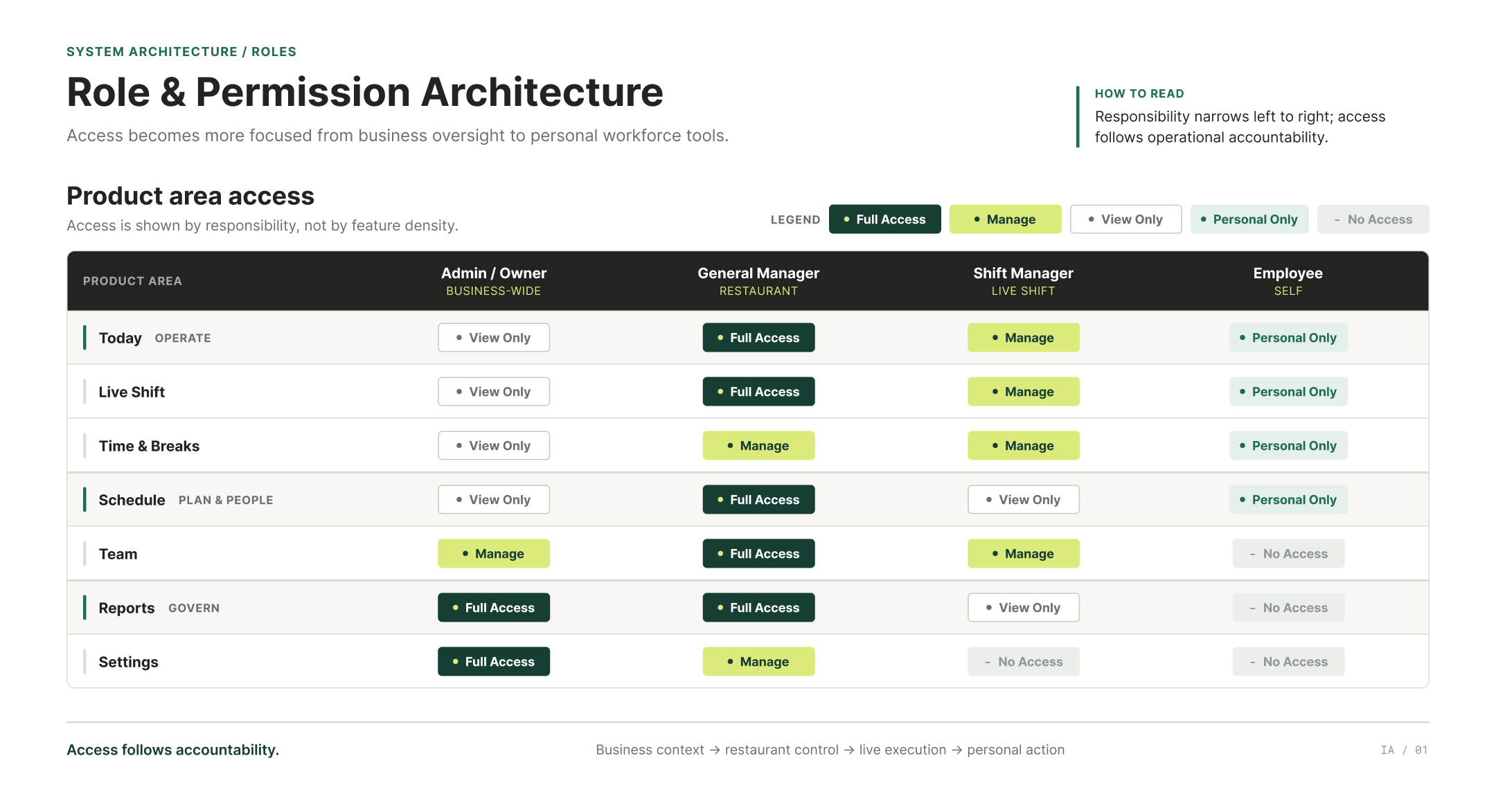
I then mapped those responsibilities to product areas. Managers can act on operational issues, while employee access stays focused on personal schedules, time, availability, and shift-related tasks. This keeps the interface relevant to each user and reduces unnecessary controls.
KEY PRODUCT DECISIONS
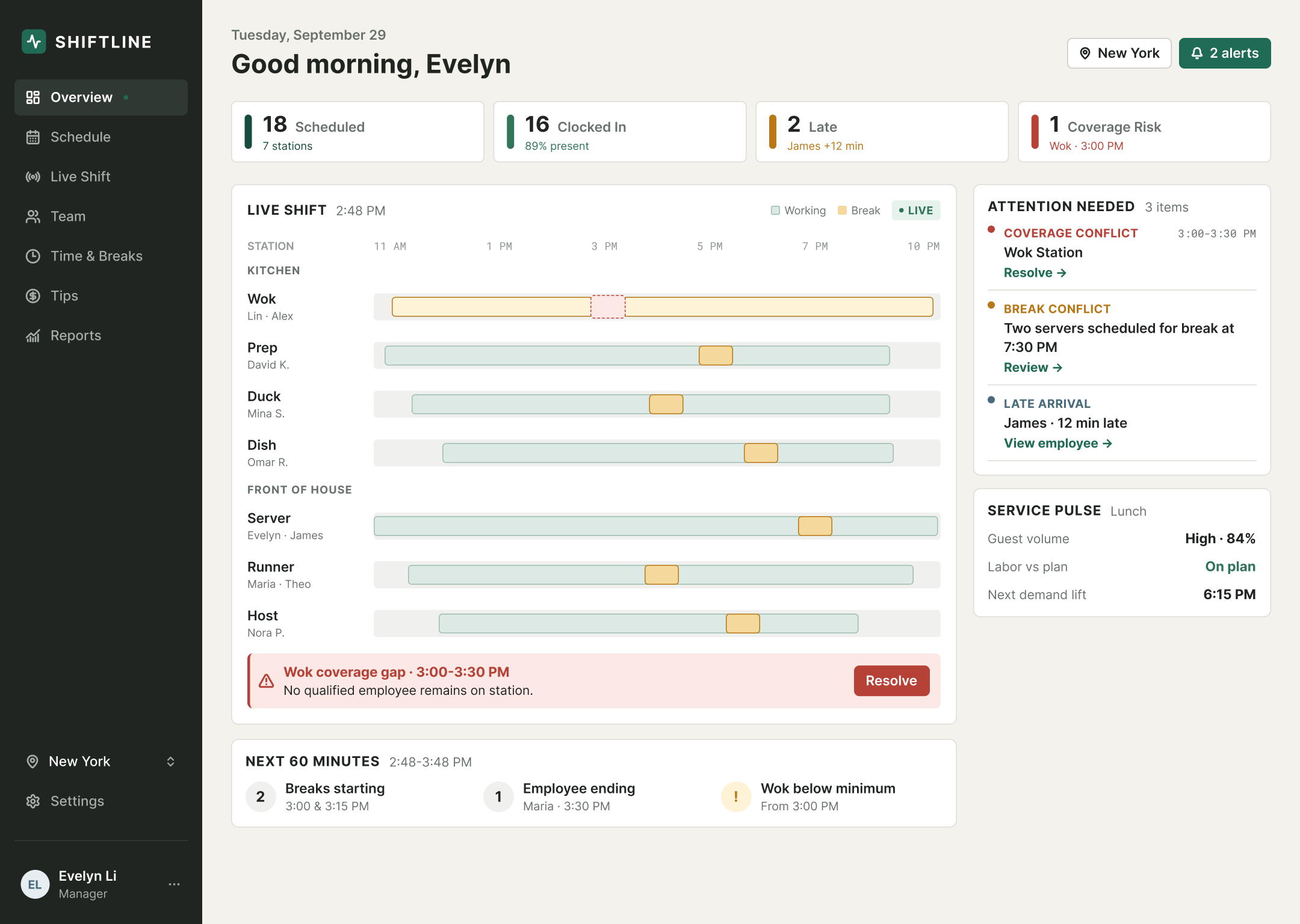
Managers need to understand the state of the restaurant in seconds. The overview prioritizes live staffing, coverage risk, and the issues that need attention now, so managers can move from scanning to action without checking every employee individually.
The hierarchy puts operational exceptions ahead of general statistics. The goal is to answer three questions quickly: What is happening now? What needs attention? What is likely to happen next?
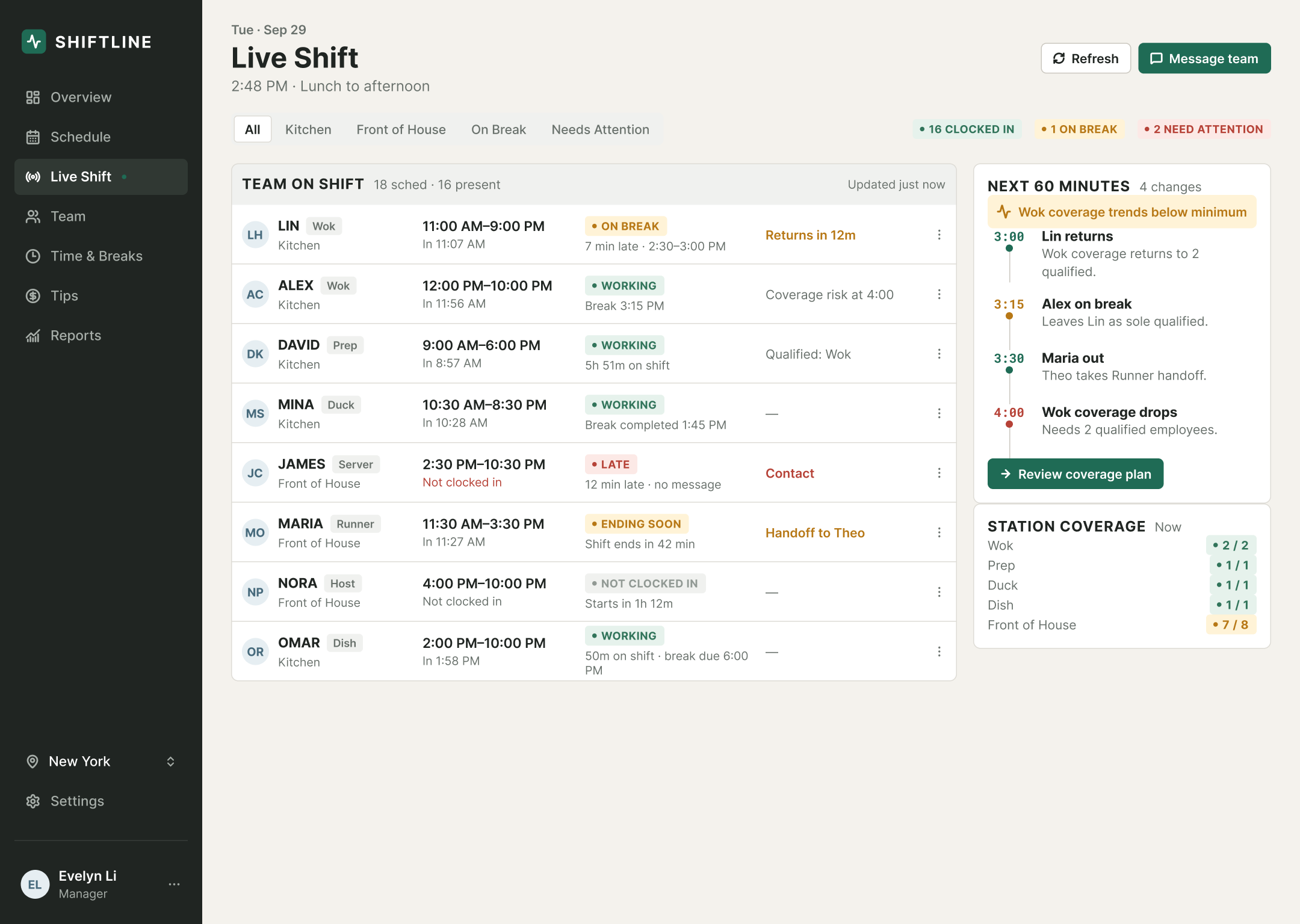
A time clock can show who clocked in. During service, managers also need to understand what each status means for the shift. Live Shift brings working, break, late, and upcoming changes into one place.
Current status and near-term changes are presented together so the interface supports active service, not just record keeping. Managers can see the shift as it changes instead of reconstructing it from separate systems.
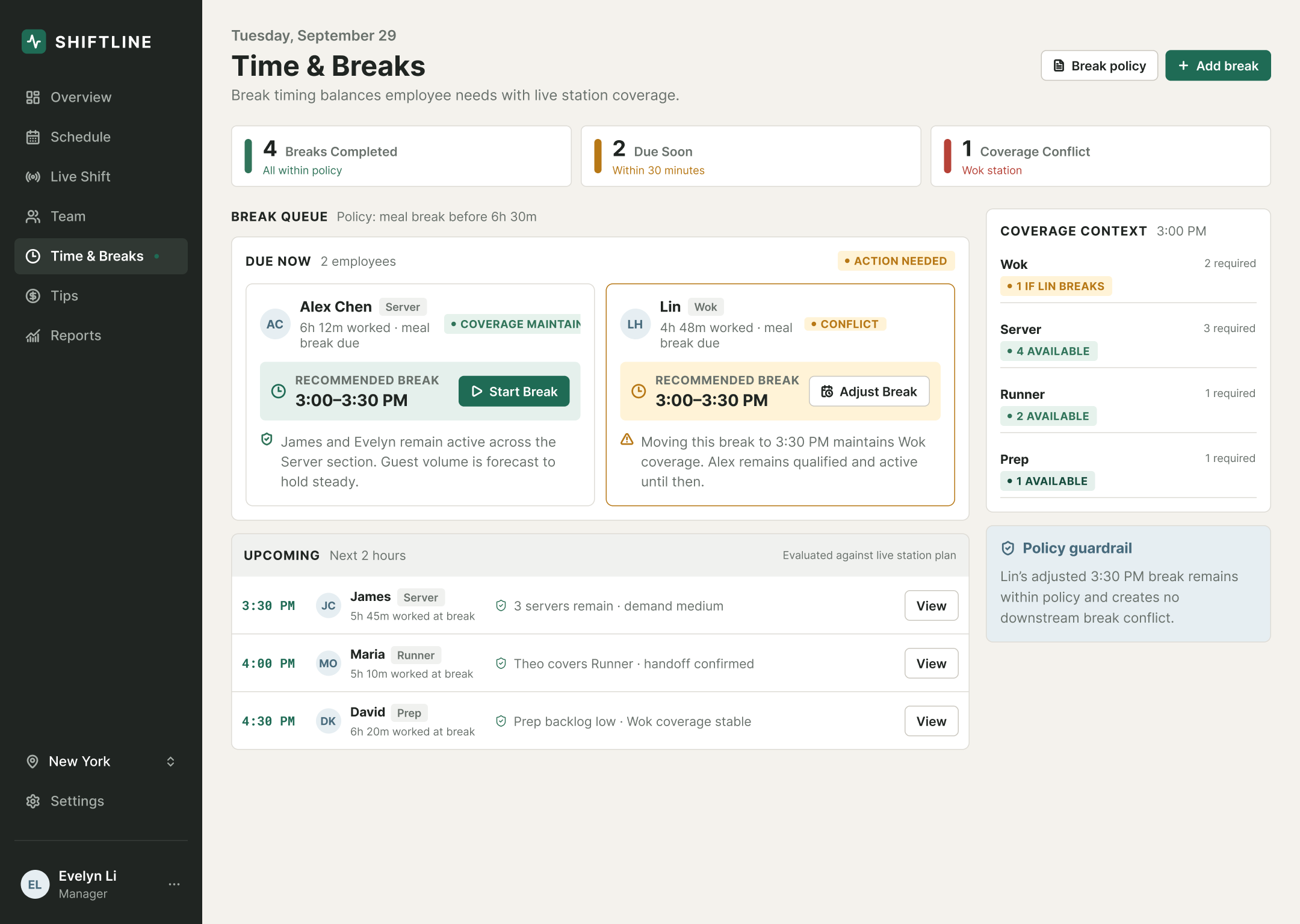
Break decisions affect more than one employee. Shiftline connects break timing with role and station coverage, helping managers see when a routine break could create an operational gap.
The product surfaces the conflict in context and keeps the manager in control of the decision. This creates a foundation for decision support without automating away operational judgment.
NEXT STEP